

I almost didn’t take the loaner.
A buddy of mine works at a dealership group two towns over, and he called me on a Tuesday asking if I wanted to run a 2026 M5 Competition for the weekend before it went to a customer. My first thought was “sure, free car,” and my second thought, about ten minutes later, was “wait, this thing weighs almost as much as a pickup truck now.” I’d read the specs online and figured it would drive like a barge with a fast badge on it.
I was wrong about that, and I was wrong about a few other things too. So instead of writing another spec-sheet regurgitation, I want to walk you through what it’s actually like to live with this car for a few days — the good, the annoying, and the stuff that surprised me.
The Weight Thing Is Real, But Not in the Way You’d Expect
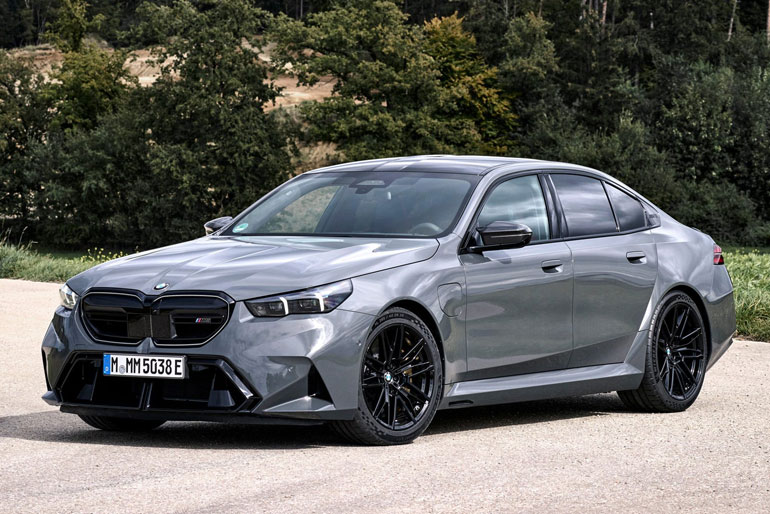
Let’s just get this out of the way because everyone brings it up. The new M5 is a plug-in hybrid now, and that battery pack adds a genuinely noticeable amount of mass. We’re talking something in the neighborhood of 5,300-plus pounds depending on how it’s optioned. That’s SUV territory.
When I first pulled out of the dealership lot, I braced myself for that floaty, disconnected feeling you get in heavy sedans. Didn’t happen. BMW clearly spent a ridiculous amount of engineering time hiding that weight, because through a set of back roads I drive almost every week, the car felt planted and eager, not sluggish.
Where you do feel it is in quick direction changes — a sharp lane-change maneuver or a tight parking lot three-point turn. There’s a split second where you can sense the car gathering itself before it responds. It’s not bad, it’s just there, and if you’ve driven an older E39 or E60 M5, you’ll notice the difference immediately.
Living With the Hybrid System Day to Day
This is the part I actually think matters more for real buyers than lap times.
The M5 Competition now runs a plug-in hybrid setup, and BMW claims something around 25 miles of pure electric range. In my actual driving — mixed suburban streets, a bit of highway, one grocery run — I got closer to 20 miles before the gas engine kicked in. That’s still genuinely useful if your commute is short.
Here’s what I didn’t expect: driving around town in EV mode, this car is dead silent and kind of eerie in the best way. You roll up next to someone at a light in near silence, then when the light turns green and you actually get on it, the twin-turbo V8 wakes up and it’s a completely different personality. It’s like the car has two separate moods and no in-between warning.
A few practical notes if you’re considering one:
- Plan on a Level 2 home charger if you want to actually use the EV range daily. Charging off a standard wall outlet took embarrassingly long — I’m talking most of a day.
- The battery does eat into trunk space slightly compared to older M5 generations. Not a dealbreaker, but if you’re a golf clubs and a suitcase kind of person, measure first.
- Fuel economy in hybrid mode, once the battery’s depleted, isn’t dramatically better than the old car. This isn’t a Prius. Don’t buy it expecting to save money at the pump.
Step-by-Step: How I’d Actually Test Drive One
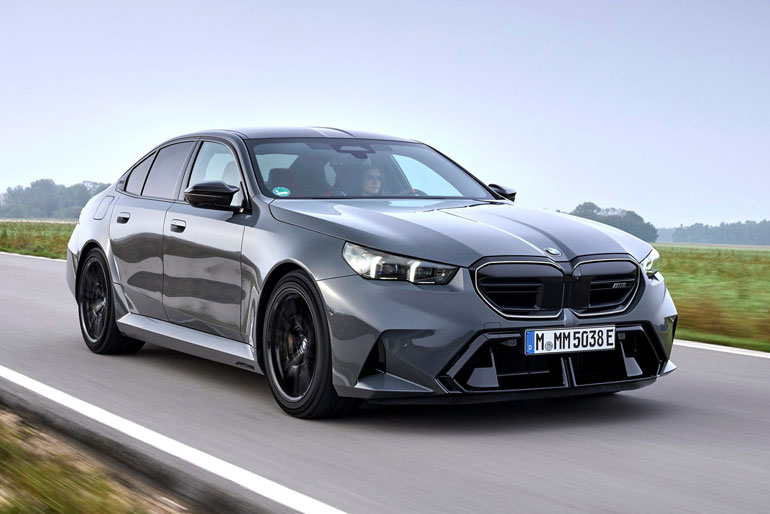
If you’re shopping for this car, don’t just take it around the block like most people do. Here’s the sequence I’d recommend, based on what actually revealed the car’s character to me:
- Start in full EV mode. Get a feel for the steering weight and brake pedal without the drama of the engine. This tells you how the chassis actually behaves.
- Switch to Hybrid mode and drive a stretch of normal traffic. Pay attention to how smoothly it transitions between electric and gas power. Mine had one slightly clunky handoff at low speed that I’d want to confirm wasn’t just my test car.
- Find a stretch of open road and put it in Sport Plus. This is where the car actually makes sense. The extra weight disappears from your attention because you’re too busy dealing with how fast this thing actually is.
- Test the brakes hard, more than once. With this much weight, brake fade on repeated hard stops is a legitimate concern. My car had the optional carbon-ceramic brakes and they held up fine, but ask specifically whether the car you’re looking at has them, because the standard steel brakes work harder for their money.
- Sit in the back seat. Seriously. A lot of buyers of this car have families, and legroom plus the transmission tunnel intrusion matters more than people think going in.
Where It Actually Shines
I took it up a two-lane road I know well, the kind with elevation changes and a few blind crests, early on a Sunday morning before traffic showed up. This is where the car stopped feeling like a heavy sedan and started feeling like what BMW actually built it to be.
The all-wheel-drive system puts power down in a way that makes you feel like you can’t really get it wrong. I intentionally got on the throttle a little early coming out of a tightening corner, expecting some drama, and the car just… handled it. Quietly redirected the power and kept going. Older M5s would have let you know you made a mistake. This one just corrects it and moves on.
The sound, when you’re in the loud setting, is genuinely good — a proper V8 growl with some turbo character mixed in. I know some people miss the old naturally aspirated M5 sound entirely, and I get that, but on its own terms this is a satisfying noise.
Mistakes I Made (So You Don’t Have To)
I left it in EV mode and wondered why it felt slow. Obvious in hindsight, but if you’re used to gas-only performance cars, it’s easy to forget you’re basically driving a golf cart with 194 horsepower of electric motor until you manually switch modes.
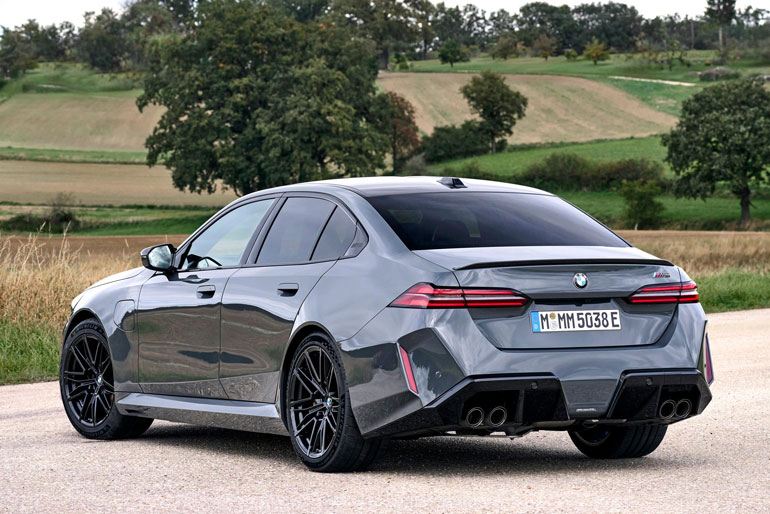
I underestimated how wide it is. Parking garages built before 2015 are not this car’s friend. I clipped a curb sensor alarm twice in one afternoon just navigating a downtown structure.
I assumed the fuel economy readout was accurate for my driving. It resets weirdly between charge cycles and gave me an optimistic number early on that dropped once the battery was actually depleted. Don’t trust the first 20 miles of any readout as representative.
Common Mistakes Buyers Make With This Car
Talking to people at the dealership and a few owners in an online M5 forum thread, a few patterns kept coming up:
- Buying it without a home charger already planned. You’ll still get gas-car performance without one, but you’re paying for hybrid tech you’re not using.
- Skipping the extended test drive. A ten-minute loop around the block tells you nothing about how this car behaves once it’s warmed up and you’re actually pushing it.
- Not budgeting for tires. This car is quick enough, and heavy enough, that rear tire wear happens faster than people expect, especially if you spend much time in Sport Plus.
- Assuming insurance costs will be similar to the outgoing model. The added tech and hybrid components generally push replacement part costs up, and insurers have noticed.
Final Thoughts
Handing the keys back after that weekend was harder than I expected. I went in ready to write off the extra weight as a dealbreaker and came out genuinely impressed with how BMW engineered around it. It’s not the raw, unfiltered driving experience of the old naturally aspirated M5s — nothing with a battery pack this size is going to be — but it’s a genuinely fast, genuinely comfortable car that also happens to let you commute in near silence half the time.
If you’re cross-shopping this against something like an Audi RS7 or a Mercedes-AMG E63, my honest advice is to drive all three back to back on the same stretch of road, in the same day, because the differences are subtle enough that a week apart will blur them in your memory. That’s exactly what caught me off guard with the M5 — it’s better in person than it has any right to be on paper.