

I still remember the first time I walked into a supercar exhibition in Dubai — just as a spectator, obviously, because my bank account laughed every time I looked at the price tags. But standing within three feet of some of these machines? It does something to you. Your heart rate spikes. You forget what you were doing with your life. You start questioning every career choice you ever made.
I’ve spent years obsessing over automotive engineering — reading specs at midnight, watching dyno tests on YouTube at 2 AM, and boring my friends at dinner parties with horsepower statistics. So when someone asks me to list the coolest cars ever built, I don’t just Google it. I feel it.
This isn’t just a list. It’s a love letter to machines that pushed boundaries, broke records, and made engineers lose sleep in the best possible way.
1. SSC Tuatara — The One That Actually Did It
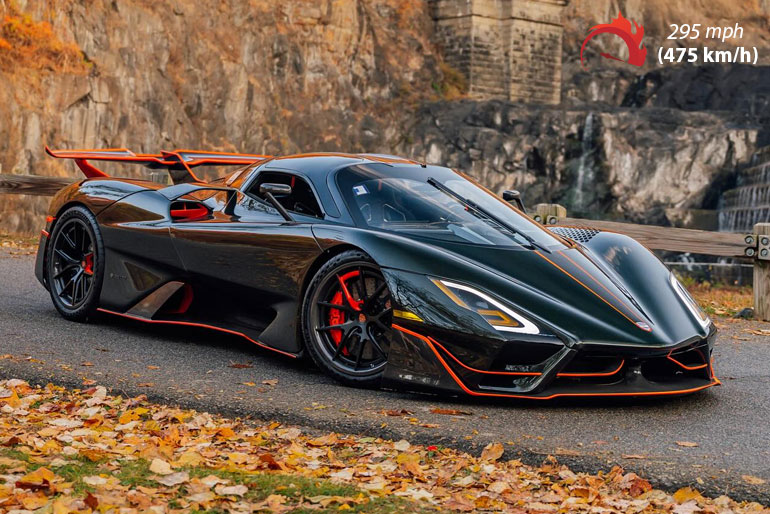
Let’s start with the elephant in the room — or rather, the 1,750-horsepower cheetah on the highway.
The SSC Tuatara from Shelby SuperCars (yes, that’s a real American company, not a typo) became one of the most talked-about cars of the last decade when it claimed a production car speed record. There was drama, controversy, disputed footage — the whole nine yards. But even setting aside the record stuff, this car is extraordinary.
That carbon fiber body isn’t just for looks. Every curve was shaped in a wind tunnel to hit a drag coefficient of 0.279 — lower than most luxury sedans. The twin-turbocharged 5.9-liter V8 runs on either E85 or pump gas, and the flat-plane crank gives it a sound that could make a grown man tear up.
What I find genuinely cool about the Tuatara is that it came from a small team in Washington state. Not Ferrari. Not Bugatti. A scrappy American outfit that said, “We’re going to build the fastest car on the planet.” And they got insanely close.
The lesson here? Passion-driven engineering beats legacy budget every single time.
2. Aston Martin DBS Superleggera — Violent Elegance
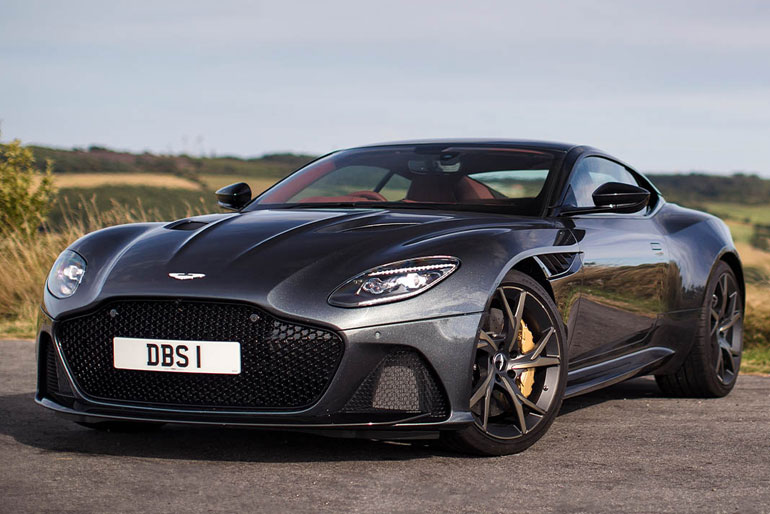
If I had to describe this car to someone who’d never seen it, I’d say: “Imagine if a British gentleman punched you in the face, apologized in a perfect accent, then offered you tea.”
The DBS Superleggera (“Superleggera” means super-light in Italian, which is a flex Aston Martin has earned) is powered by a 5.2-liter twin-turbo V12 pushing 715 horsepower. It does 0-60 in 3.4 seconds. But the way it does it — the composure, the soundtrack, the way the body almost looks sad to be going that fast — that’s what separates it.
I sat in one at a luxury auto show. Just sat. Didn’t go anywhere. The interior felt like a bespoke suit — every stitch deliberate, every surface considered. This is the car James Bond should be driving if the franchise had any sense.
What makes it so cool though isn’t just performance. It’s the philosophy. Aston Martin genuinely believes a car should be as beautiful standing still as it is at speed. And with the Superleggera, they nailed it.
3. Mercedes-Benz Maybach Exelero — The Dark Knight
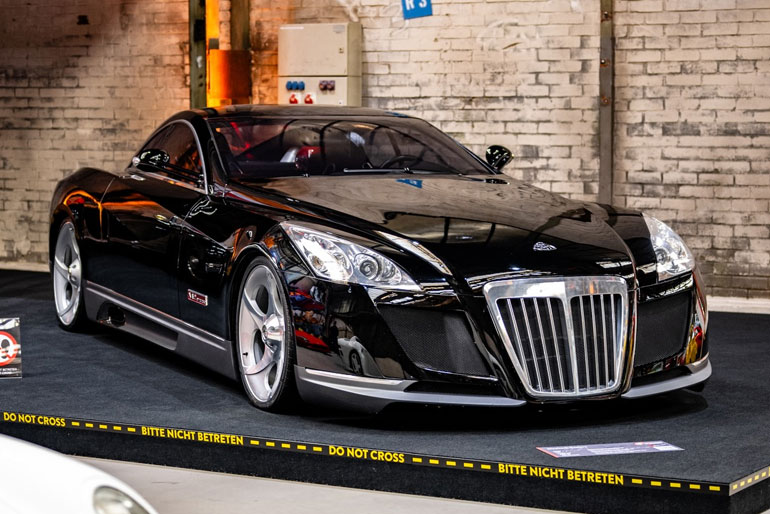
Only one was ever built. ONE.
The Exelero was commissioned by Fulda Tires in 2004 to test a new generation of high-speed tires. Mercedes designed and built it as a one-off concept, and what they produced looked like something a supervillain would drive to a charity gala.
Eight meters long. Twin-turbo V12. 700 horsepower. A top speed of 218 mph. And that face — that long, aggressive, almost menacing front end — still looks futuristic almost 20 years later.
Jay-Z famously featured it in his “Lost One” music video, and the car reportedly sold for around $8 million. The buyer’s identity was kept private, which honestly makes it even cooler.
What strikes me about the Exelero is that it wasn’t built to sell. It was built to demonstrate. It’s a concept that actually moved, actually performed, and actually terrified speed records. That kind of automotive bravado is rare.
4. Bentley Hunaudières Concept — The Road Never Taken
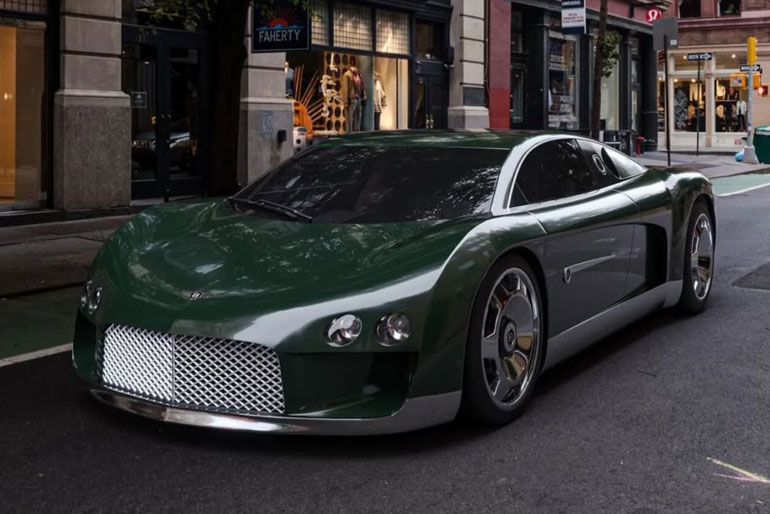
Here’s a car that breaks my heart a little every time I think about it.
The Hunaudières (named after the famous straight at Le Mans) was unveiled at the 1999 Geneva Motor Show. It had a W16 engine — yes, the same configuration that eventually went into the Bugatti Veyron, because at the time Volkswagen Group owned both brands and was clearly in a mood.
It was gorgeous. Low, wide, futuristic. The W16 was positioned mid-rear, giving it perfect weight distribution. And it never made it to production.
That’s the tragedy of concept cars — the coolest ones sometimes stay concepts. The technology from the Hunaudières didn’t die though. It migrated. That W16 engine philosophy lived on in arguably the most famous production hypercar ever made. So in a weird way, every Veyron and Chiron you see on the road is a spiritual descendant of this forgotten Bentley.
Mistake to avoid: Never dismiss concept cars as irrelevant. They’re R&D labs with wheels.
5. Ferrari 488 — The One That Changed Everything
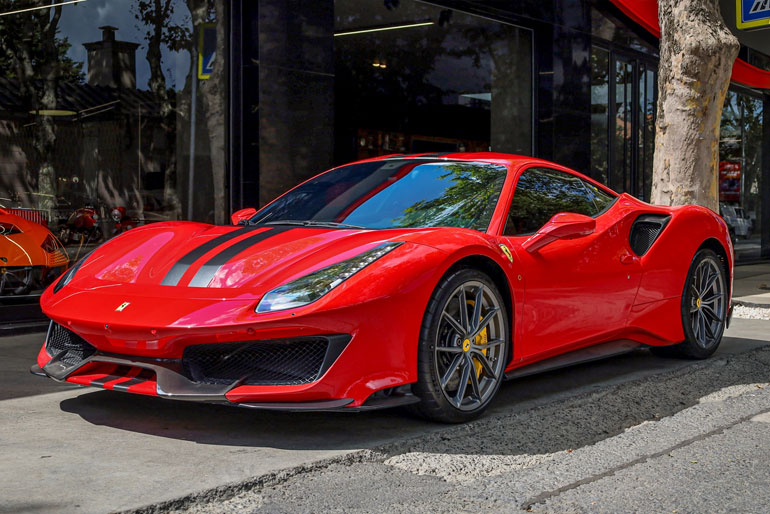
I’ll be honest — I’ve driven a Ferrari 488. Not for long. Not on a track. A friend of a friend had one and let me take it around a parking lot for about four minutes while my hands shook the entire time.
It was enough.
The 488 replaced the beloved 458 Italia, and Ferrari fans were skeptical when they heard “twin-turbocharged.” Purists wanted the naturally aspirated scream. What they got instead was 660 horsepower with even more torque, delivered more smoothly, at more RPMs, with better fuel efficiency. And a sound that — okay, it’s different from the 458, but it’s good different.
What makes the 488 genuinely special is how approachable it is for a 200+ mph car. The electronics — the Side Slip Control, the magnetorheological dampers — make it feel like the car is helping you rather than trying to kill you. That’s Ferrari’s real achievement here. They made a supercar that a talented amateur could learn to love without losing fingers.
6. Lincoln Excalibur — America’s Wild Card
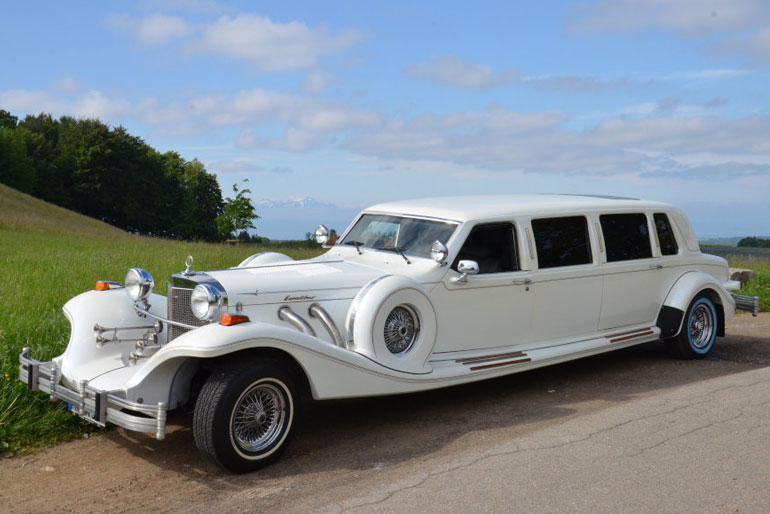
Now this is a car that most people don’t know existed, and that’s exactly why it deserves a spot here.
The Excalibur was technically built under the Studebaker and later independent production umbrellas, but Lincoln’s connection to the nameplate and its neo-classic styling made it an icon of a very specific American moment — the late 1970s and 80s when “luxury” meant chrome, long hoods, and looking like you owned a country club.
It looked like a 1930s roadster but ran modern mechanics. It was theatrical, outrageous, and completely impractical. It was also bought by celebrities, musicians, and people who wanted to make an entrance without apology.
Cool doesn’t always mean fastest. Sometimes cool means unforgettable. The Excalibur understood that better than almost any car of its era.
7. Bugatti La Voiture Noire — Eighteen Million Reasons
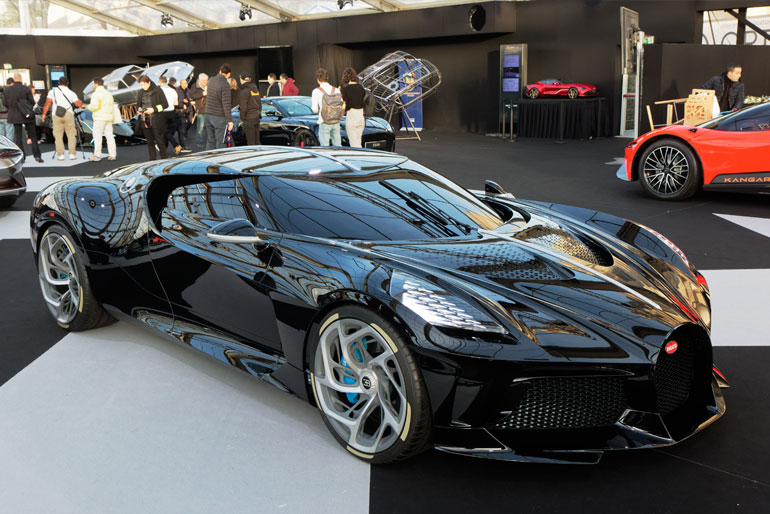
Eighteen. Million. Dollars.
That’s what someone paid for the La Voiture Noire (“The Black Car” in French), making it the most expensive new car ever sold at the time of its reveal in 2019. Only one was built. The buyer’s identity? Still a mystery.
The car is a tribute to the Type 57 SC Atlantic, a 1930s Bugatti that is itself one of the most valuable cars in existence. The La Voiture Noire takes that heritage and wraps it in carbon fiber, four exhausts per side (eight total), and a quad-turbocharged 8.0-liter W16 pushing 1,479 horsepower.
Here’s what gets me though: Bugatti spent time and resources creating a car they knew they’d only sell once. They didn’t do it for volume. They did it because they could. They did it as an artistic statement, a flex, a monument to what’s possible when money and engineering genius collide without a committee veto.
That kind of confidence is its own kind of cool.
8. Tramontana — The Spanish Alien
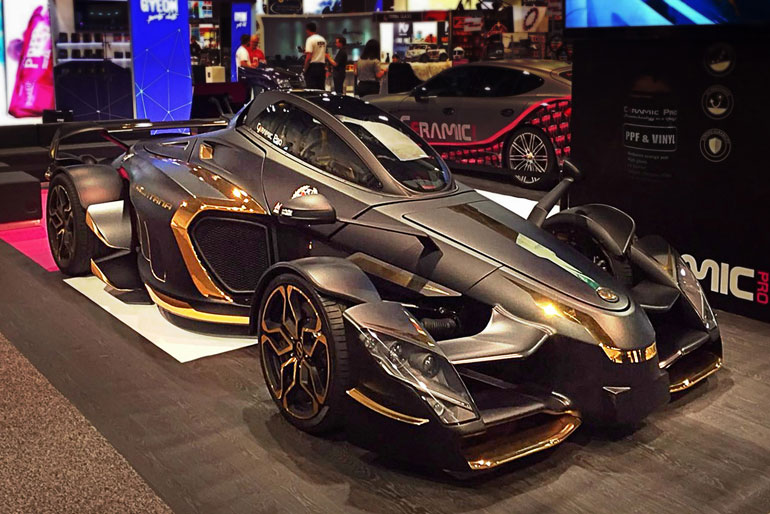
If you’ve never heard of the Tramontana, you’re about to have your world changed.
Built in Spain by a company called AD Tramontana, this car looks like it was designed by someone who spent too long watching F1 races and then decided road cars were insufficiently dramatic. The cockpit layout is a tandem two-seater — driver in front, passenger behind, like a fighter jet. The carbon fiber body is unlike anything else on the road.
Under the hood: a twin-turbocharged Mercedes V12, tuned to over 700 horsepower. Weight? About 1,000 kilograms. You do that math.
Only around a dozen were ever made, and each one was hand-built and customized to the buyer’s specs. It never got the marketing budget of a Ferrari or the pedigree of a Bugatti, but in terms of sheer visual audacity, almost nothing touches it.
The Tramontana is proof that small companies with radical vision can create something more interesting than the giants playing it safe.
9. Knight XV — The Tank You Can Take to Brunch

Alright, switching gears entirely — pun very much intended.
The Knight XV is built by Conquest Vehicles in Canada, and calling it an SUV feels insulting. It’s 6,800 kilograms of armored luxury. The body is hand-crafted. The interior can be specced with TV screens, rear bars, wood paneling, and whatever else you need for your apocalypse-ready lifestyle.
It runs on a Ford Triton V10 — the same engine used in heavy-duty trucks — and offers Level 6 ballistic protection. This thing will stop high-powered rifle rounds while you’re watching Netflix in the back seat.
The price? About $300,000 to $500,000 depending on configuration.
I find this car fascinating not because I’d ever need it, but because it represents a completely different definition of “performance.” Speed doesn’t make something cool. Protection, presence, and the sheer statement of rolling up in something that looks like it survived a war — that’s its own kind of cool.
10. Jaguar XF10 Concept (2003) — The Future That Became Now
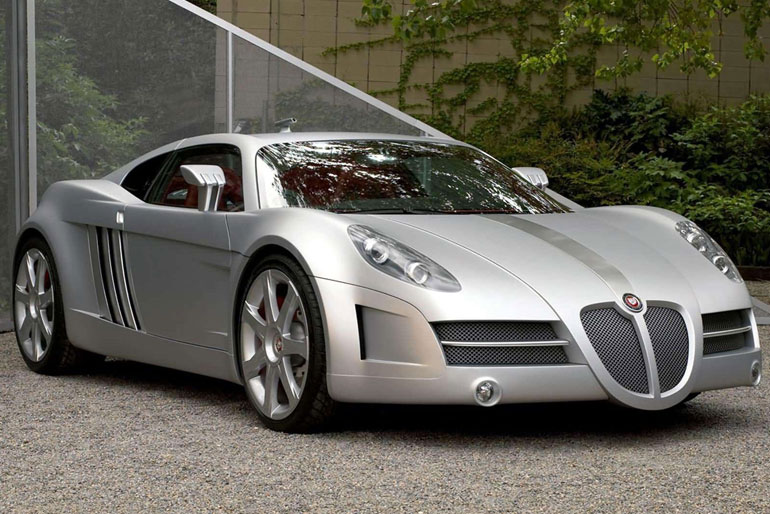
The XF10 Concept from 2003 doesn’t get talked about enough, and that’s a crime.
When Jaguar showed this car, the design language was almost alien for the brand. Jaguars at the time were still leaning on round headlights and that classic British reserve. The XF10 said: “What if we actually looked at the future?” Sharp lines, a lower roofline, that aggressive front fascia.
People dismissed it as too radical for Jaguar’s conservative customer base. Then the 2008 XF production car launched, drew heavily from this concept’s DNA, and basically saved Jaguar’s relevance in the modern era.
The XF10 is a reminder that concept cars are blueprints for courage. Sometimes design teams are right, and they just need the rest of the world to catch up.
What Makes a Car Truly Cool? (Here’s What I’ve Learned)
After years of following this industry, visiting shows, watching launches, and driving when I get lucky enough to be invited, here’s what I actually think:
Cool isn’t speed alone. The Knight XV is as cool as the SSC Tuatara, just for entirely different reasons.
Cool is confidence. The La Voiture Noire wasn’t designed to sell a hundred units. It was designed to exist, unapologetically, as a statement.
Cool often comes from small teams. The Tramontana, the Tuatara, even early Aston Martin history — passion from a small group often beats corporate committee design.
The ones you almost never see are often the coolest. Rarity creates mystique. That’s why the Exelero, the Hunaudières, and the XF10 Concept haunt enthusiasts more than mainstream models.
And finally — the biggest mistake car fans make is only chasing horsepower numbers. The cars on this list aren’t just about what they can do in a straight line. They’re about what they mean. The engineering philosophy, the design courage, the cultural moment they represent.
Next time you’re at an auto show, don’t just look at the spec sheet. Stand in front of the car. Give it a minute. Ask yourself why it was built. The answer is usually more interesting than the 0-60 time.
That’s what separates a vehicle from a legend.