

Last summer, I drove four hours just to stand next to a Koenigsegg Jesko at a private auto show in Dubai. No test drive, no ride-along — just me, a velvet rope, and a machine that looked like it had been designed on another planet. I didn’t even care. That moment lit something in me that hasn’t gone out since.
I’ve spent the better part of the past year obsessing over what’s happening in the high-performance car world for 2026. I’ve talked to enthusiasts, watched every press release, read every spec sheet twice, and attended three auto expos. And what I found genuinely surprised me — not just in terms of raw speed, but in terms of where the entire concept of a “racing car” is heading.
So here’s my breakdown of the 10 best racing cars of 2026. Not ranked by top speed alone, not by price, but by the full picture — what makes each car genuinely remarkable right now.
1. Tesla Roadster — The One That Started Arguments
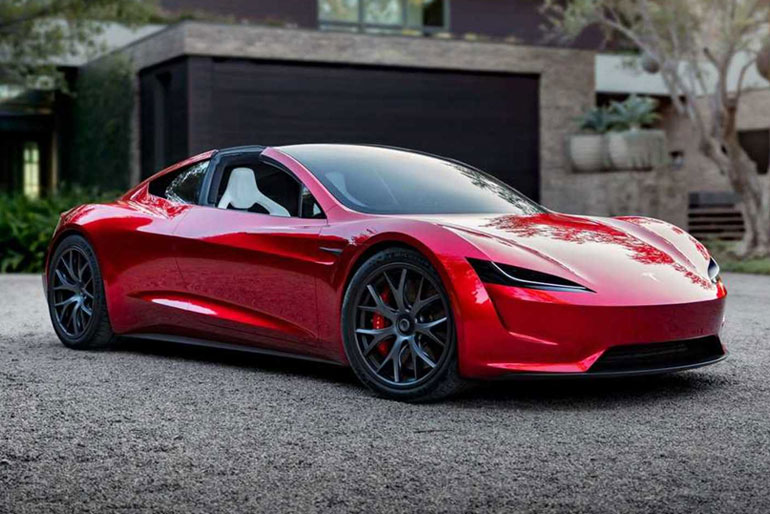
I’ll be honest: when Tesla first teased the Roadster’s return, I rolled my eyes. An EV at the top of a racing car list felt like a publicity stunt. Then I saw the numbers.
0 to 60 mph in under 1.9 seconds. A claimed top speed over 250 mph. All-wheel drive torque so instant it doesn’t feel real.
What changed my mind wasn’t the specs, though. It was watching footage of the Roadster pulling out of a corner with that eerie, silent aggression that only electric motors can deliver. There’s no lag. No gear hunting. Just force.
The 2026 model comes with an optional SpaceX thruster package — yes, really — that uses cold gas thrusters to add downforce and lateral stability. Whether that translates to track credibility long-term is still being debated, but it’s impossible to ignore. The Tesla Roadster doesn’t feel like it belongs in 2026. It feels like it belongs in 2036.
Best for: Tech-forward enthusiasts who want to win arguments at track days.
2. Audi R8 Decennium — A Love Letter Before Goodbye
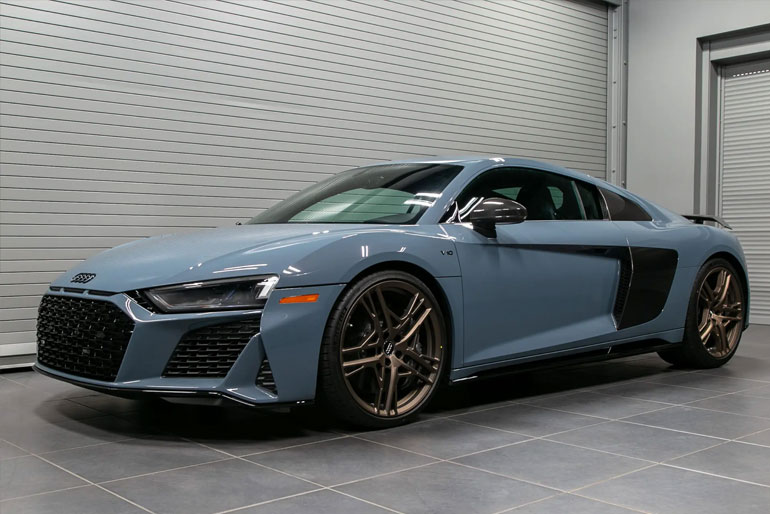
The R8 Decennium is a limited edition that Audi released to mark a decade of the R8’s legacy. I’ve been following the R8 since its debut, and this version feels like the brand poured everything into one last send-off.
Naturally aspirated 5.2-litre V10. 620 horsepower. A sound that makes grown adults emotional in parking lots.
What I appreciate most about the Decennium isn’t the power — it’s the intention. This is a car designed for people who actually drive. The Quattro all-wheel-drive system puts power down so confidently it almost feels like cheating. The steering is direct enough that you feel connected to every imperfection in the tarmac.
In a world where manufacturers are racing toward electrification, the R8 Decennium exists as a counterpoint. A reminder that combustion engines, done right, are still something special.
Best for: Purists who want a collector’s car that’s still genuinely fast.
3. Porsche 718 Cayman GT4 RS — The Track Car That’s Street Legal
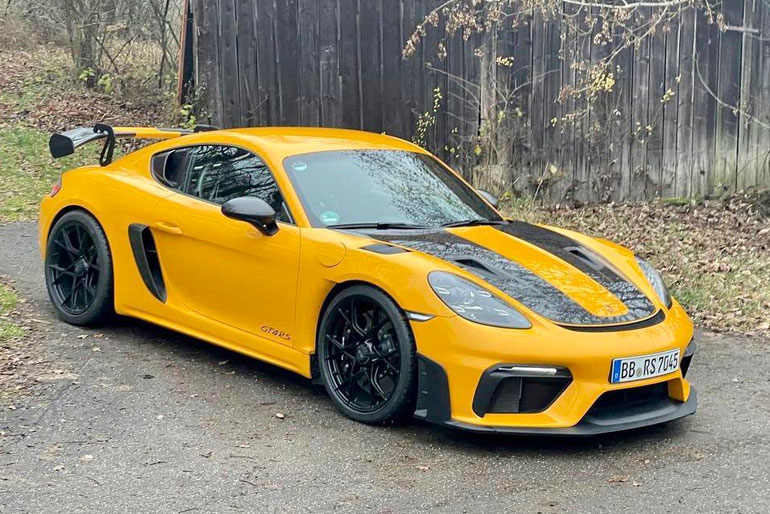
If you’ve ever been to a track day, you’ve probably seen a Cayman making drivers in more expensive cars look silly. The GT4 RS takes that reputation and cranks it up significantly.
Porsche pulled the 4.0-litre flat-six engine straight from the 911 GT3 and dropped it into the smaller, lighter Cayman body. The result is 500 horsepower in a car that weighs around 1,415 kg. The power-to-weight ratio is ferocious.
What I didn’t expect when I first read about this car was how livable it apparently is as a daily. Multiple owners I’ve spoken with say it’s surprisingly docile when you’re not pushing it. But push it — especially through a technical corner sequence — and it becomes something else entirely. The rear-mounted engine, the aerodynamic package, the PDK gearbox… it all clicks together like a mechanical argument you can’t counter.
The GT4 RS also comes equipped with a Weissach Package that strips out more weight. If you’re buying this car and not tracking it, you’re probably missing the point.
Best for: Track-day regulars who also need to drive home.
4. Aston Martin Valkyrie — Formula 1 in Disguise
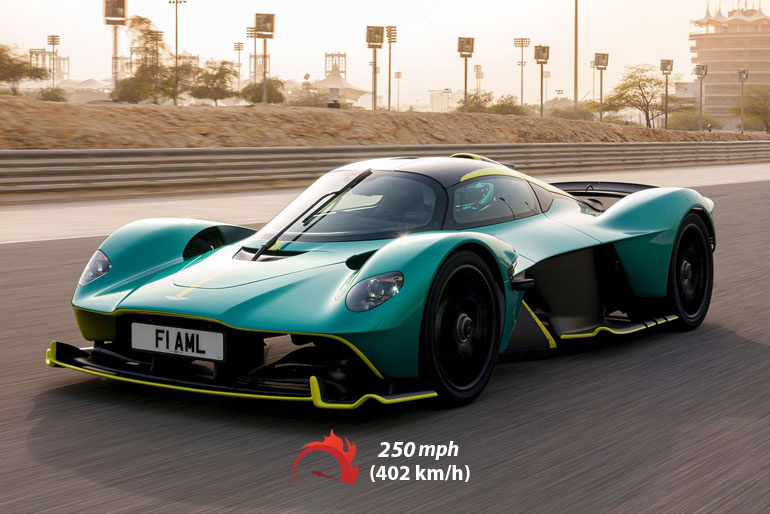
This is not a car for everyone. It’s not even a car for most people. The Aston Martin Valkyrie was developed with Red Bull Racing’s Formula 1 aerodynamics team, and it shows in every curve and vent and blade-thin surface.
The hybrid powertrain — a naturally aspirated 6.5-litre V12 from Cosworth paired with a KERS electric system — produces over 1,000 horsepower. The car weighs roughly the same as a well-loaded motorbike. The downforce at speed is so significant that the Valkyrie can theoretically drive upside down at high enough velocity.
I haven’t driven it. Very few people have. But I’ve read enough from those who have to know that the experience is categorically different from anything else on this list. One journalist described it as “wearing a spaceship.” The seating position is reclined almost flat, legs elevated, mirrors replaced by cameras. You’re not sitting in the car — you’re strapped to it.
Production numbers are extremely limited, and most units were spoken for years ago. But as a statement of what’s possible when F1 engineering goes road-legal, nothing in 2026 touches it.
Best for: Collectors and serious drivers with serious budgets.
5. Mazda RX-9 — The Rotary’s Comeback
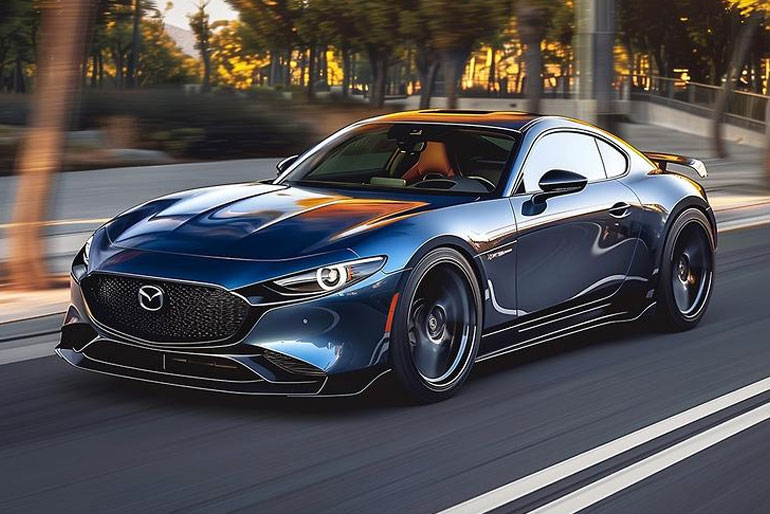
The rotary engine has been through a rough decade. Mazda retired the RX-8 back in 2012, and for years, the RX-9 felt like a rumour that enthusiasts kept alive out of hope more than evidence.
Then it started becoming real.
The 2026 RX-9 brings back the rotary not just as a combustion unit, but in a hybrid configuration where the rotary engine acts as a range extender for an electric powertrain. The result is a sports car that’s lighter than a traditional hybrid, uniquely smooth in power delivery, and — perhaps most importantly — different from everything else on the road.
Mazda’s design language here is stunning. The RX-9 is low, wide, and aggressive without being theatrical. It’s the kind of car that looks fast standing still.
What I find most interesting about the RX-9’s comeback is what it says about Mazda’s confidence. They didn’t play it safe. They brought back a polarising engine technology and built an identity around it rather than trying to hide it. That’s rare in modern automotive development.
Best for: Enthusiasts who value originality and driving feel over outright horsepower numbers.
6. Koenigsegg Jesko Absolut — Possibly the Fastest Production Car Ever Built
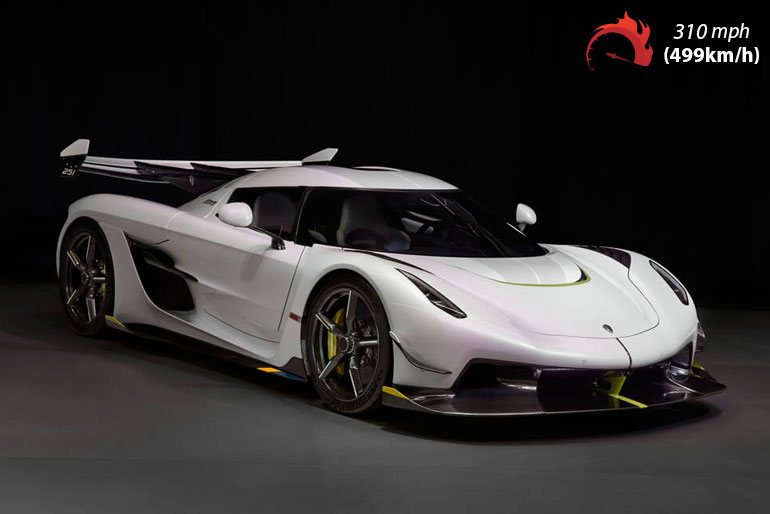
The Jesko Absolut’s claimed top speed is 310 mph (499 km/h). That number is so large it barely registers. For context, that’s approaching the takeoff speed of a commercial aircraft.
Whether it ever hits that speed in a verified run is almost beside the point. The engineering required to even make the claim credible is extraordinary. The twin-turbocharged 5.0-litre V8 produces 1,600 horsepower on E85 fuel. The nine-speed multi-clutch transmission can change gears in under a millisecond. The aerodynamic drag coefficient is the lowest Koenigsegg has ever achieved.
I stood about three metres from a Jesko at an auto expo in 2025, and what struck me was how purposeful every surface looked. There’s no decoration. Every scoop, every channel, every angle exists to manage airflow. It’s engineering as art.
Koenigsegg builds cars in tiny numbers in Ängelholm, Sweden, and the Jesko Absolut is among the most exclusive cars on this list. But it earns its place here not through exclusivity, but through being genuinely, verifiably extraordinary.
Best for: Speed record chasers and engineering obsessives.
7. Hispano-Suiza Carmen Boulogne — The One Most People Haven’t Heard Of
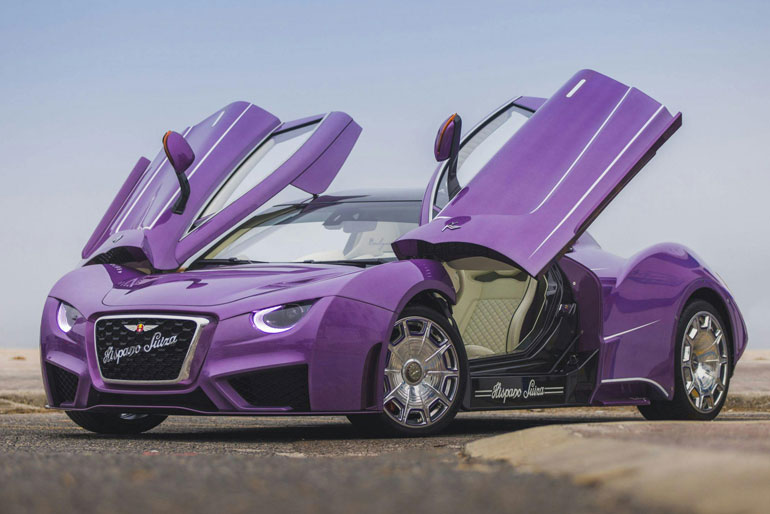
Here’s a name that might be new to you, and that’s part of what makes it interesting.
Hispano-Suiza is a Spanish brand with roots going back to 1904 — once one of the most prestigious automobile manufacturers in the world before going dormant. The Carmen Boulogne is their return, and they came back swinging.
This is a fully electric grand tourer producing over 1,000 horsepower. The design is unmistakably European in the older, more dramatic sense — elongated hood, sweeping bodywork, interior that feels more like a luxury apartment than a cockpit. Carbon fibre everywhere, handcrafted details throughout.
What makes the Carmen Boulogne fascinating for 2026 is that it challenges what we think a racing car has to look like. This isn’t aggressive or angular or covered in wings. It’s elegant. And yet it hits 60 mph in under 2.5 seconds and carries that pace with genuine composure.
Only a handful were built. They are, by any measure, rare. But as a piece of automotive history reawakened and re-imagined for the electric age, the Carmen Boulogne deserves far more attention than it usually gets.
Best for: Those who want performance with genuine heritage and jaw-dropping aesthetics.
8. Porsche 911 Hybrid — Evolution Done Right
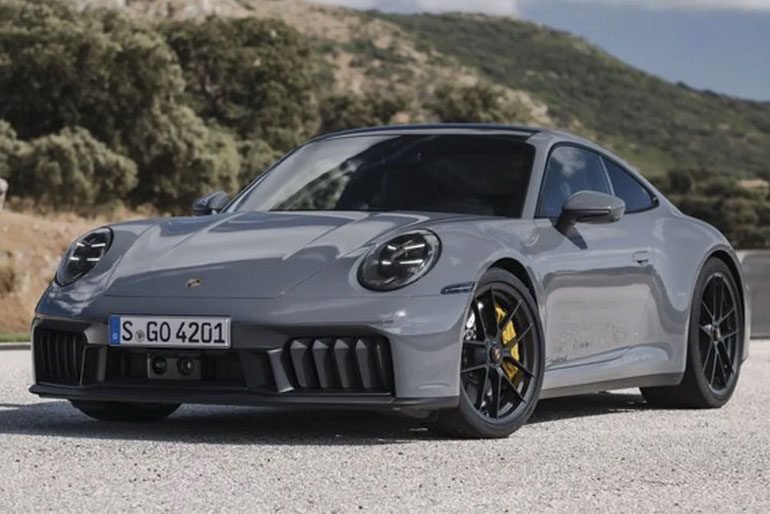
Porsche had a problem. The 911 is one of the most beloved sports cars in automotive history. Millions of people have strong opinions about what a 911 should feel like. And Porsche needed to electrify it without ruining it.
What they delivered in 2026 is genuinely impressive.
The 911 Hybrid uses a compact electric motor integrated into the powertrain to add torque at low RPM, filling in exactly where traditional combustion engines feel their weakest. The result isn’t an electric car with a combustion engine bolted on — it’s a 911 that feels sharper off the line, more responsive through corners, and somehow more connected than previous generations.
Purists were nervous. Most of them, after driving it, stopped being nervous.
The 2026 system also incorporates regenerative braking that the driver can adjust through the steering wheel paddles — not just for energy recovery, but as a genuine driving tool. During spirited cornering, it adds a layer of control that experienced drivers actually appreciate rather than tolerate.
Porsche didn’t try to reinvent the 911. They improved it. That’s harder than it sounds.
Best for: 911 loyalists who want to embrace the future without losing what made them fall in love in the first place.
9. Aston Martin Valhalla — Mid-Engined, and Proud of It
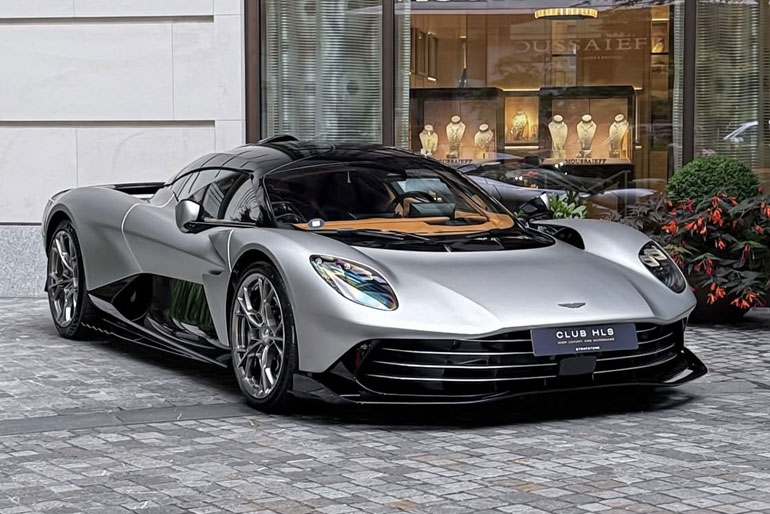
Aston Martin has the Valkyrie for the stratosphere. The Valhalla is their car for the rest of us — which is a funny thing to say about a mid-engined hybrid supercar with around 950 horsepower, but here we are.
The Valhalla started its development life as an F1-adjacent project, and while it was revised significantly through development, the DNA remains. Mid-mounted twin-turbo V8, front and rear electric motors, full hybrid system. The car does 0 to 60 in around 2.5 seconds and can run in pure electric mode for short distances.
What distinguishes the Valhalla from the crowd is the chassis. The carbon fibre monocoque is stiff and light, and the suspension geometry has been tuned obsessively for corner entry and exit feel. Multiple drivers with serious track experience have noted that the Valhalla communicates exceptionally well — you know what the car is doing at the limit, which is precisely what you need.
The interior is also striking. Aston Martin has always done beautiful cabins, and the Valhalla doesn’t disappoint — fighter jet-inspired, with physical switchgear for the things that matter on track.
Best for: Drivers who want a track-focused supercar that still has personality off the circuit.
10. Koenigsegg Gemera — Four Seats, 1,700 Horsepower, Zero Apologies
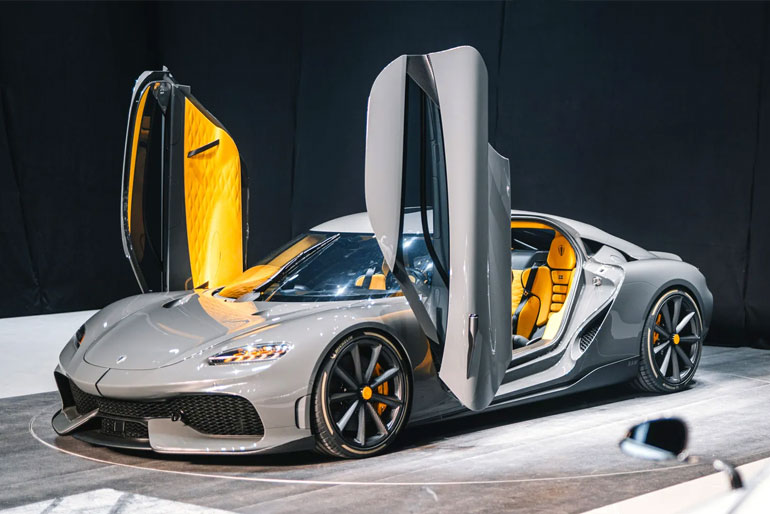
I saved this one for last because it genuinely bends the rules of what belongs on a list like this.
The Koenigsegg Gemera is a four-seat family car. Also, it produces 1,700 horsepower. Also, it does 0 to 60 in 1.9 seconds. Also, it seats four adults with actual luggage space. Also, the rear doors open backwards and upwards in a way that makes everyone nearby stop and stare.
The powertrain is a hybrid system combining a small twin-turbo three-cylinder combustion engine with three electric motors — one on the crankshaft and one at each rear wheel. The combustion engine alone would be underwhelming. Combined with the electric system, it becomes something that defies category.
What I find most remarkable about the Gemera is that Koenigsegg didn’t compromise the car in any direction. It’s genuinely fast — hypercar fast. It’s genuinely practical — four real seats, no apologies. And it’s beautiful in that understated, precise way that Koenigsegg has made its trademark.
It’s also one of the very few cars on this list that you could, theoretically, use to school your kids in the morning and then embarrass Ferraris at a track day in the afternoon. Not that I’m suggesting it. But you could.
Best for: Anyone who wants to obliterate the idea that performance and practicality are mutually exclusive.
A Few Things I Learned Chasing These Cars
First mistake I made early on: obsessing over top speed numbers as the main metric. After enough time around real car people, I learned that the experience of a car — its communication, its character, its precision — matters far more than a number on a spec sheet.
Second lesson: electrification isn’t killing the soul of sports cars. It’s changing it. The Tesla Roadster and the Gemera prove that electric torque, used thoughtfully, creates its own kind of excitement.
Third thing worth noting: limited production cars like the Valkyrie and Carmen Boulogne often get dismissed as “collector pieces” rather than real driver’s cars. That’s usually wrong. The engineering that makes them rare is also what makes them exceptional.
Who Actually Needs One of These?
Nobody. And that’s fine. These cars exist at the intersection of engineering ambition and human desire — not utility. They represent what’s possible when manufacturers push without restraint.
But here’s what I tell people who ask: you don’t need to own a car to appreciate what it means. Following these machines — understanding what engineering decisions were made and why — makes you a sharper thinker about technology, design, and performance in general.
The 2026 racing car landscape is genuinely exciting. It’s messy, it’s transitional, it’s full of competing visions about what performance should look like. And for anyone who’s interested in machines that move fast and think hard about why they do, there’s never been a better time to pay attention.